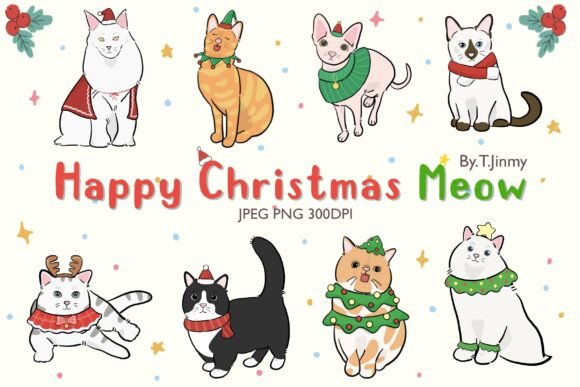
Reviewing Happy Christmas Meow for Holiday Embroidery
As an embroidery designer who has spent years digitizing and stitching thousands of designs, I have learned that not every cute graphic translates well to thread. When I first pulled up the Happy Christmas Meow file on my screen, my initial reaction was one of cautious optimism. The concept is undeniably charming—a festive feline theme fits perfectly into the current market trend where pet lovers and holiday enthusiasts overlap. However, charm alone does not make a viable machine embroidery design. I needed to know if the lines were clean, if the density was manageable, and if it would hold up on real-world fabrics.
I decided to test this design not just as a digital asset, but as a core component of a potential product line for the upcoming holiday season. My goal was to determine if Happy Christmas Meow could serve as a reliable staple for Etsy sellers, craft business owners, and hobbyists looking to create high-quality handmade products. Here is my practical assessment of how this illustration performs under the needle.
First Impressions: Visual Balance and Mood
The visual personality of Happy Christmas Meow leans heavily into whimsical warmth. In the realm of Illustrations converted for embroidery, the biggest challenge is often retaining the softness of the original art without creating a muddy stitch field. This design manages to keep its character. The layout appears balanced, with a focal point that draws the eye immediately to the subject’s expression. For a designer, this is crucial. If the details are too scattered, the viewer’s eye gets lost, and the impact of the embroidered patch or garment decoration diminishes.
The mood is playful yet polished. It avoids the overly chaotic elements that can plague holiday designs, opting instead for a cleaner aesthetic. This makes it versatile. It feels appropriate for a child’s room, but not so juvenile that it cannot be used on adult apparel. This duality is a significant selling point for small shop product creators who need to maximize the utility of their design assets.
Real-World Application: From Screen to Stitch
To truly evaluate the design, I simulated its use in a common commercial scenario: a custom tote bag design for a local boutique. Tote bags are typically made from canvas or heavy cotton, which provides a stable base for embroidery. I imagined placing Happy Christmas Meow on the front panel. The scale seemed appropriate for a standard 5x7 or 6x10 hoop, allowing the details to breathe without requiring excessive zooming or microscopic stitching.
Beyond tote bags, I considered its application in sweatshirt embroidery. Fleece and French terry are forgiving fabrics, but they require careful attention to stitch density. If a design is too dense, it creates a stiff, cardboard-like feel that customers dislike. Based on the visual complexity of Happy Christmas Meow, it appears to rely on a mix of fill stitch for the body and satin stitch for outlines or accents. This combination usually works well on thicker fabrics, provided the underlay is sufficient to prevent sinking. For a personalized gift, such as a monogrammed holiday sweater, this design offers enough surface area to integrate initials subtly without overpowering the main image.
I also evaluated its potential for baby embroidery. Parents are increasingly seeking unique, non-generic items for infants. A onesie or baby blanket featuring this cat could be a hit. However, this brings us to critical technical considerations regarding fabric texture and stability.
Technical Considerations and Fabric Compatibility
While Happy Christmas Meow looks promising, it is not a "stitch and forget" file. Experienced embroiderers know that the success of any embroidery project depends on the interaction between the thread, the fabric, and the stabilizer. Here are the specific areas where you need to exercise caution:
- Fabric Texture and Type: On thin or stretchy fabrics, such as jersey knits or lightweight rayon, this design may pucker if not properly stabilized. I strongly recommend using a cut-away stabilizer for garments that will be washed frequently. For woven fabrics like linen or cotton, a tear-away might suffice, but always test first.
- Stitch Density: Without seeing the actual stitch count, I advise checking the density settings in your software. If the design uses heavy fill stitches in small areas, it could lead to thread breaks or fabric distortion. Adjusting the density down by 10-15% can often improve the hand-feel of the finished product without sacrificing visual clarity.
- Small Details: Look closely at the finer elements of the cat’s face or any accompanying text. Tiny details can get lost in the pile of the thread, especially on textured towels or fleece. If you are stitching on a kitchen towel or terry cloth, consider increasing the size of the design slightly to ensure these details remain crisp.
- Dark Fabrics: If you plan to stitch this on dark navy or black apparel, ensure your thread colors have enough contrast. You may need to add a white underlay or adjust the color palette to prevent the design from blending into the background. A printable mockup can help visualize this before you waste thread.
Commercial Viability and Brand Consistency
For commercial embroidery professionals and digital embroidery file sellers, the question is always about value. Does Happy Christmas Meow enhance the perceived value of the item? Yes, because it offers a specific, trendy aesthetic that resonates with current consumer interests. It is not just a generic snowflake; it has personality. This helps in building brand consistency for shops that focus on whimsical, pet-friendly, or cozy holiday themes.
When listing this on platforms like Etsy, the quality of the stitch-out directly impacts customer trust. A clean, well-digitized design reduces returns and negative reviews. I recommend stitching a sample on the exact fabric you intend to sell. Take high-resolution photos of the texture and sheen of the threads. These images serve as powerful marketing tools, showing buyers that you care about quality. Whether you are creating custom apparel for a corporate holiday party or individual holiday gifts for friends, the professionalism of the stitch reflects on your brand.
Practical Designer Notes for Best Results
Before you load this embroidery file into your machine, take a moment to review these practical steps. They are the difference between a good result and a great one.
- Test on Scrap Fabric: Never stitch a new design directly on your final garment. Use a scrap piece of the same material to check for registration issues and tension balance.
- Check Hoop Size: Confirm that the design fits comfortably within your hoop, leaving at least an inch of margin around the edges to prevent hoop burn.
- Inspect Thread Colors: Match your physical thread spools to the digital color map. Sometimes, the on-screen colors do not translate accurately to real life. Adjust as needed for better contrast.
- Verify Licensing: If you are selling finished items, ensure you understand the license terms associated with the design. Most designers allow commercial use for physical products, but restrictions may apply to sharing the digital file itself.
- Use Proper Stabilizer: Match your stabilizer to your fabric. Lightweight fabrics need lightweight stabilizers to avoid stiffness, while heavy fabrics may need robust support to prevent shifting.
In conclusion, Happy Christmas Meow is a strong contender for your holiday collection. It balances artistic appeal with practical applicability, provided you respect the technical requirements of embroidery. By paying attention to fabric choice, stabilization, and stitch density, you can transform this digital illustration into a tangible, high-quality product that delights customers and enhances your portfolio. Whether for a caps, a pillow cover, or a festive apron, this design has the potential to stand out in a crowded market.